
Group, private, online or onsite Thai classes: which fits you?
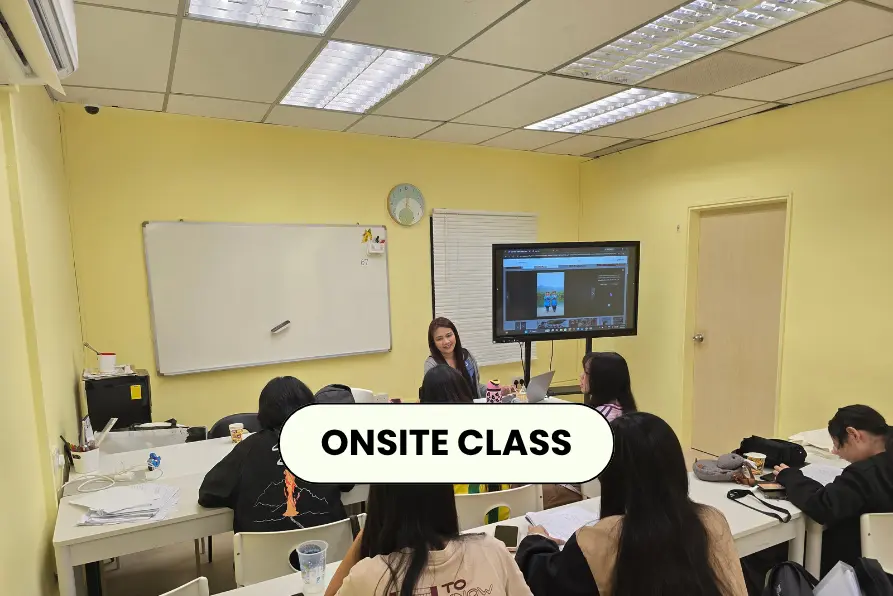
Choosing a Thai class can feel surprisingly complicated. Are you happier learning with a group or one-to-one? Would you rather come to a classroom, or join a live lesson online?
These are really two decisions. Group or private changes the attention, pace and price. Onsite or online changes where you join and what makes attendance easy.
You can start with the experience you prefer. Later in this guide, we explain how Lingo brings onsite and online learners into the same live class, so the second decision can stay flexible.
Compare the main Thai class formats
| Format | Often suits you when | Main trade-off |
|---|---|---|
| Group class | You enjoy learning with others and want a structured, lower-cost live class | Less individual control over pace and lesson topics |
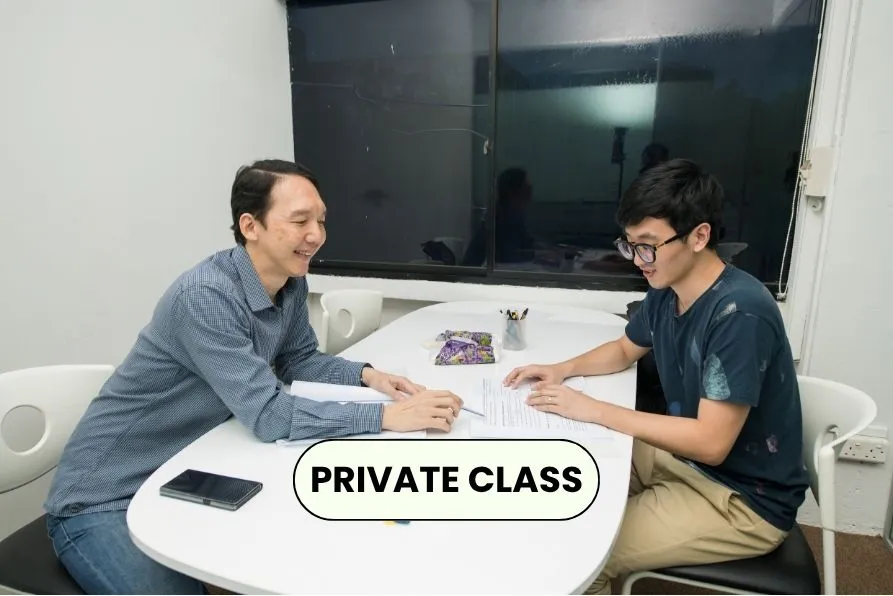
| Private 1:1 | You need flexible timing, focused correction or customised content | Higher cost and a more intense lesson |
| Onsite class | You value in-room interaction and can reach the location consistently | Travel time can make attendance harder |
| Live online class | You want a live teacher without the commute | The screen, audio and home environment affect the experience |
| Recorded or self-paced course | You need maximum timing flexibility | No live correction during ordinary study |
You can combine formats too. A group course can provide structure while a private lesson targets a specific difficulty. A live class can be your main course while recordings, apps or videos help you revise.
When a group Thai class works well
A group gives you people to listen to and speak with. You hear different questions, accents and mistakes, and you practise responding when the conversation does not follow your own script.
The shared schedule can also help. Your class moves through a curriculum together, so each week has a clear next step.
Group learning may suit you when:
- you want regular live conversation without paying for 1:1 tuition;
- you enjoy learning from other people's questions;
- a fixed class time helps you protect the time;
- you want classmates to practise with;
- you are comfortable sharing the teacher's attention.
Ask about the real group size. A class can be described as “small” and still give each learner very little speaking time.
At Lingo, we keep Thai group classes to a maximum of eight learners. The teacher can organise pair work and shared conversation while still noticing individual pronunciation and tone errors.
When private Thai lessons are worth the extra cost
Private tuition gives you the teacher's full attention. The lesson can move faster through familiar material and slow down where you need more support.
It is especially useful when:
- your schedule changes from week to week;
- you are preparing for a specific trip, meeting or family situation;
- you already know some Thai and have uneven gaps;
- you want intensive pronunciation or speaking feedback;
- you prefer a pace that would not suit a mixed group.
The trade-off is price. A private lesson also asks more of you: there is nowhere to disappear while another learner answers.
Customisation should still have structure. Ask how the teacher will track progress, choose materials and connect one lesson to the next. “We can teach anything you want” is less useful than a clear plan that adapts to your goals.
Lingo offers private language classes with a dedicated trainer. For Thai, you can use the individual attention for a personal goal while still following a longer learning plan.
Onsite Thai classes: interaction without a screen
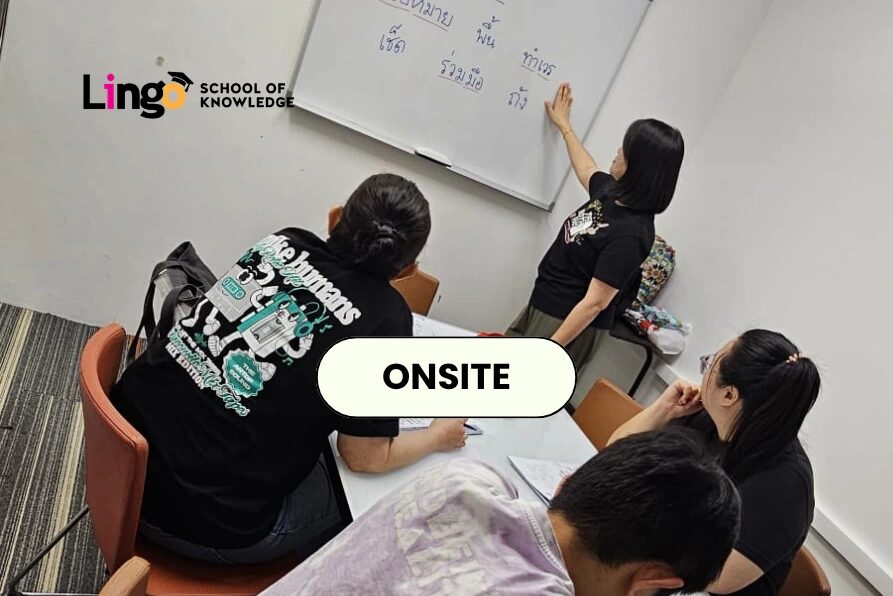
An onsite class gives the teacher and learners one shared room. Turn-taking can feel more natural, it is easier to use physical materials, and informal conversation often continues before or after the lesson.
Onsite may suit you when:
- you concentrate better away from home;
- you enjoy the energy of a physical group;
- you want body language and classroom interaction to feel immediate;
- the school is convenient from work or home.
The biggest test is practical: will you make the journey every week? A class that feels wonderful but is regularly missed will not help as much as a slightly less ideal format you actually attend.
If this is the experience you are looking for, see Lingo's onsite Thai classes at our Orchard centre. Most current Lingo Thai learners attend at the centre, even though the class may also include someone joining online.

An onsite class gives the teacher and learners one shared room. Turn-taking can feel more natural, it is easier to use physical materials, and informal conversation often continues before or after the lesson.
Onsite may suit you when:
- you concentrate better away from home;
- you enjoy the energy of a physical group;
- you want body language and classroom interaction to feel immediate;
- the school is convenient from work or home.
The biggest test is practical: will you make the journey every week? A class that feels wonderful but is regularly missed will not help as much as a slightly less ideal format you actually attend.
If this is the experience you are looking for, see Lingo's onsite Thai classes at our Orchard centre. Most current Lingo Thai learners attend at the centre, even though the class may also include someone joining online.
Live online Thai classes: convenience with a real teacher
Live online learning removes the commute while keeping the conversation and feedback that recorded study lacks.
It can work well when:
- you travel or work from different locations;
- the journey to a school would make you late or inconsistent;
- you are comfortable speaking on camera;
- you have a quiet space, stable connection and usable audio;
- the teacher actively includes online learners.
Online classes are still live classes. You should speak, receive correction and interact with other learners—not watch a long presentation.
Your setup makes a difference. Headphones can make Thai tones and vowel length easier to hear. A camera helps the teacher see whether you are participating, although the exact class policy should be clear before you enrol.
See how to join Lingo's live online Thai classes. You follow the same teacher, curriculum and live class as learners attending at the centre.
At Lingo, onsite and online are two ways to join the same class
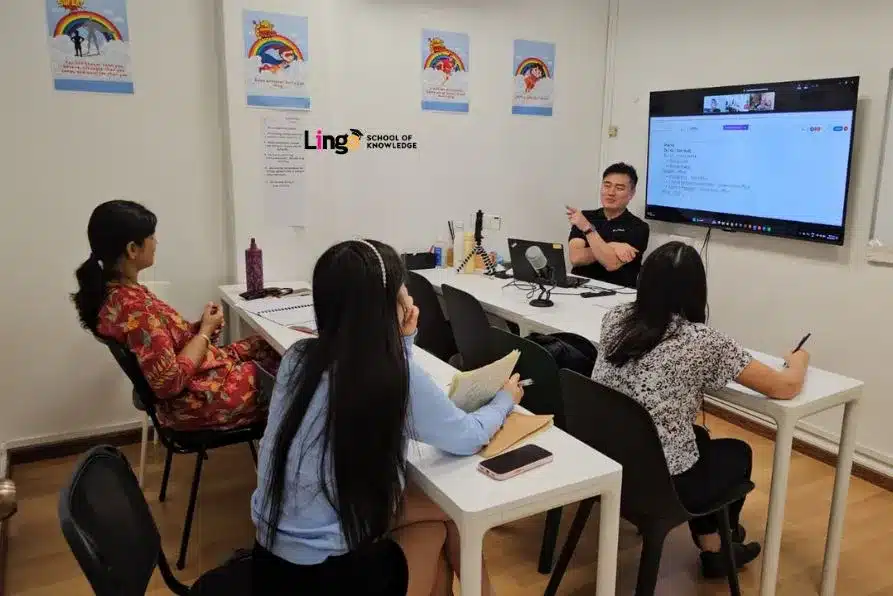
The word hybrid can sound like one more format you have to understand. At Lingo, the practical idea is simple: our Thai group classes bring onsite and Zoom learners together in one live class.
Most learners are in the classroom. Some join via Zoom, and there is often someone online. The teacher works with both sides of the class.
This gives you room to change how you attend. Perhaps you normally come to the Orchard centre, but you are travelling for business one week and still want to join your regular class. You can attend that lesson on Zoom, then return to the classroom the following week. You stay with the same teacher, classmates and point in the curriculum.
The technology behind the class has to work well. Online learners need to hear the teacher and the people in the room. The people in the room need to hear the learner on Zoom. A stable connection, suitable microphone and screen, and a teacher who includes both sides make the difference.
Our main hybrid language class page explains how this works across Lingo. When you enquire about Thai, tell us how you expect to attend most weeks and whether occasional switching is important to you.
Recorded and self-paced Thai: useful, but a different product
Recorded lessons give you full control over timing. You can repeat an explanation, pause to take notes and study in short blocks.
They are useful for revision, vocabulary and extra listening. They may also be the most realistic main option when no live schedule fits.
Our guide to learning Thai in Singapore compares recorded courses and self-study with live groups, private lessons and online tutors if you would like to see the wider set of options.
The limitation is correction. A recording cannot hear the tone you used or ask you to try the sentence again. If self-paced study is your main format, find a separate way to receive speaking feedback.
Four questions that usually decide the format
How predictable is your schedule?
A fixed group can give your week a useful rhythm. Private lessons may suit a changing schedule, while Lingo's hybrid group setup can help when occasional business travel changes where you need to join.
How much personal feedback do you need?
Choose private study for concentrated correction or a specialised goal. Choose a genuinely small group when you want feedback plus peer interaction.
Where do you focus best?
An onsite room can reduce distractions. Online learning can remove a tiring commute. Be honest about which friction is more likely to make you miss class.
What can you sustain?
Compare the full commitment, not only the hourly price. Include travel time, minimum packages, materials, missed-class rules and what happens after the first level.
Try the teaching, not only the format
Two group classes can feel completely different. The same is true of two private teachers or two online courses.
Use a trial to notice your speaking time, the quality of correction, how the teacher explains tones and whether the class feels comfortable. Our Thai trial class guide gives you a simple way to judge the experience.
At Lingo, you can try our conversation-first approach before deciding. Check the current Thai schedule and free trial classes. You can tell us whether you expect to attend mainly onsite or online, and we can explain how the class will work.